This year’s fifth annual Campaign Ad Net Zero Awards showed that reducing carbon emissions delivers commercial performance in both efficiency and effectiveness, wherever you sit in the supply chain.
A special thank you goes to AOP for sponsoring this year’s awards, and to our supporting partners, the Advertising Association, AdGreen, IPA and ISBA, whose contributions ensured the continuation of the awards.
With two new categories this year, Marketing and Sustainability Collaboration and The Business Case for Better, the awards reflected the breadth of work happening across agencies, brands, media owners and technology partners, with household names including The Guardian, Renault Group, Tesco, Spotify and EDF securing wins on the day.
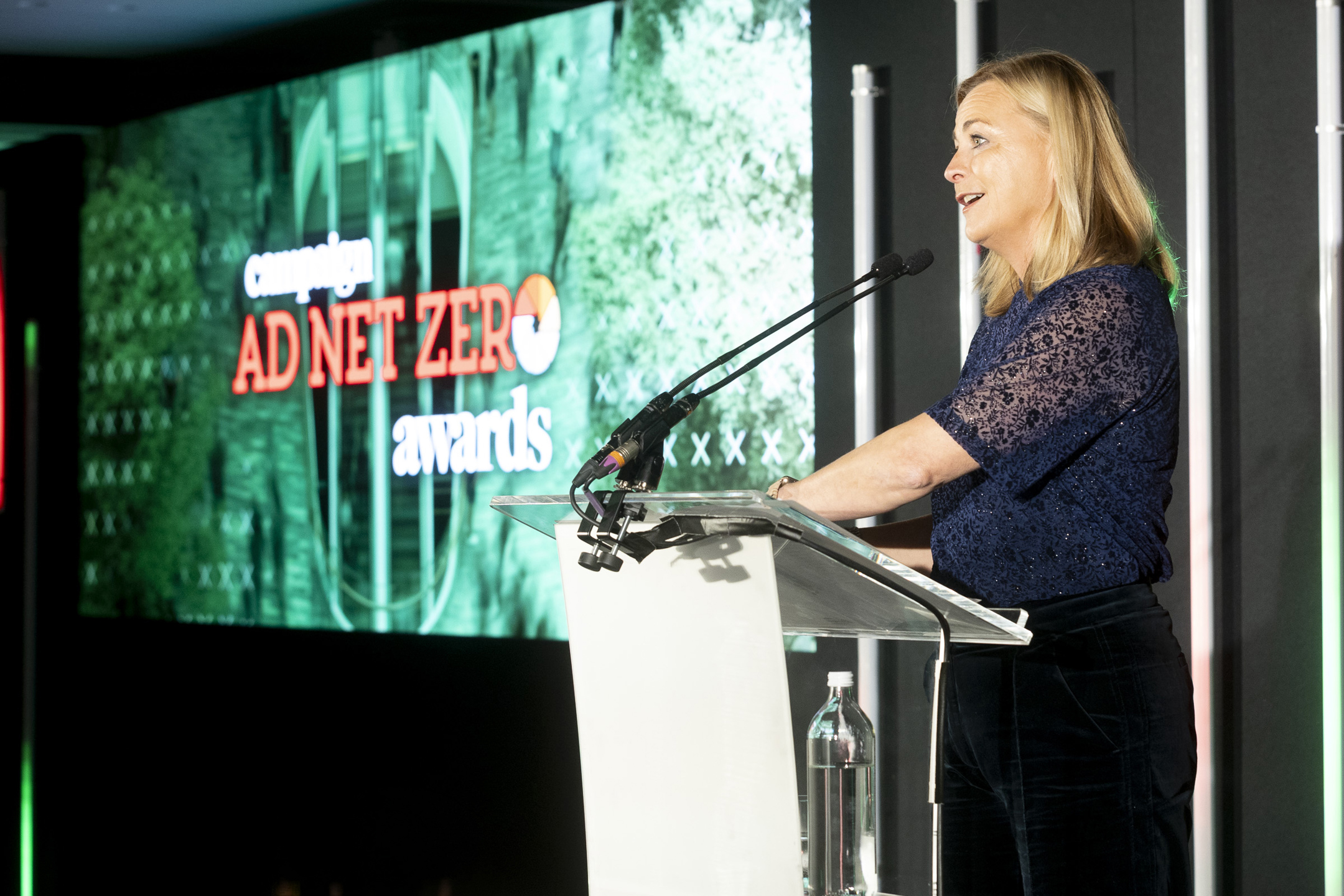
Philippa Forrester hosted the afternoon, with Campaign’s Editor-in-Chief, Gideon Spanier, opening the event.
The awards were judged by a jury of 48 experts from across the advertising sector and beyond, co-chaired by Seb Munden and Alessandra Bellini, and once again guests enjoyed a 100% vegan menu.
What this year’s winners tell us
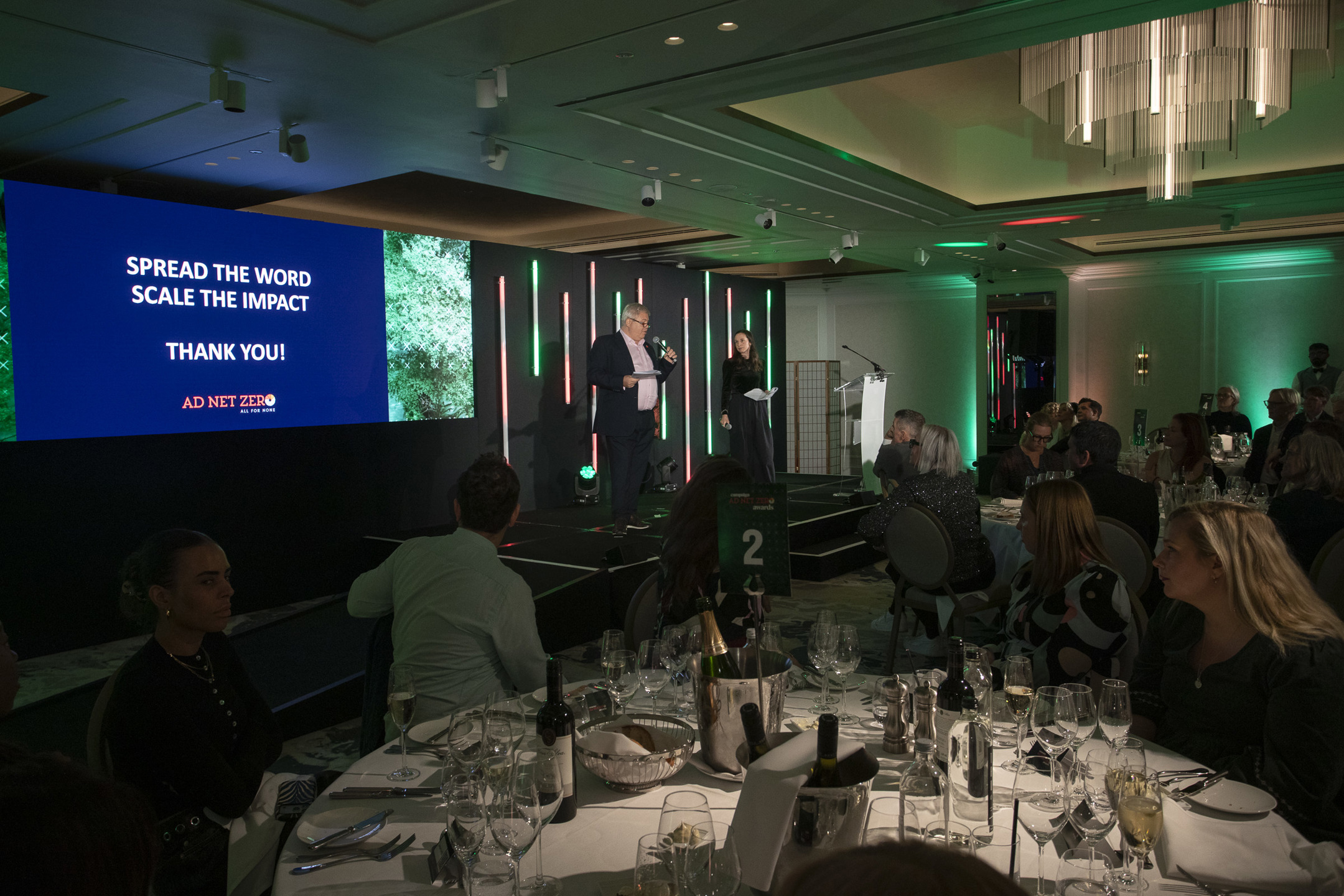
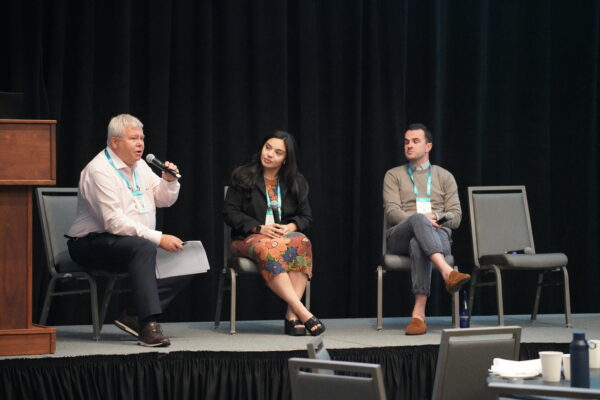
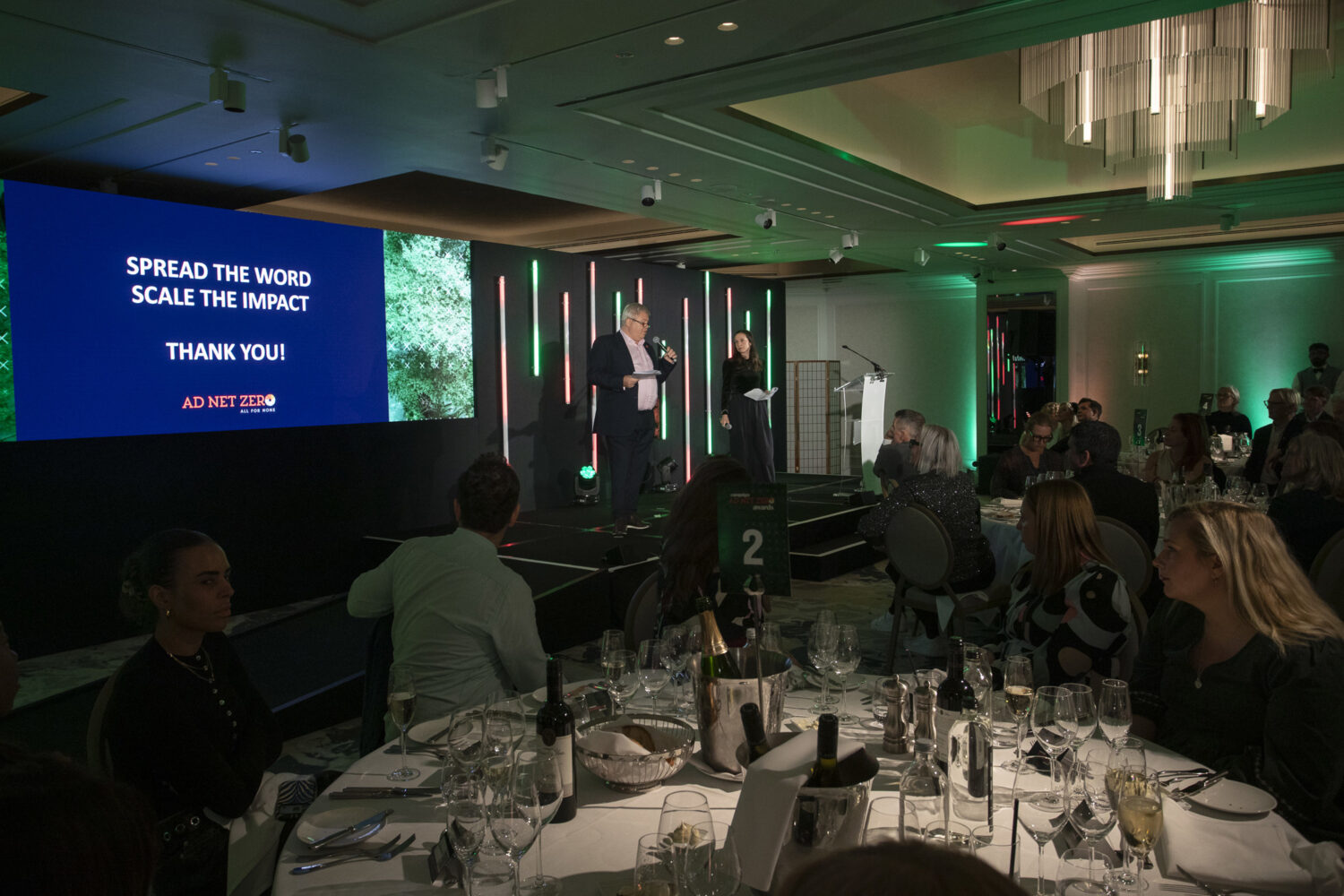
Before the awards were presented, Seb Munden CBE, Chair of Ad Net Zero, and Elle Chartres, Ad Net Zero Programme Director, shared insights from our analysis of all 28 category-winning entries, testing the room with an interactive quiz on the data behind the work.
The takeaway was clear: decarbonisation is no longer a side project or an added cost. Every winner embedded at least one of the five Actions in the Ad Net Zero Action Plan, and 57% integrated three or more, connecting business operations with media efficiency and creative messaging. Media planning and buying (Action 3) featured in more than 71% of winning entries, while 68% included customer-facing messages encouraging more sustainable behaviours (Action 5).
Elle also pointed to our ongoing research with Kantar, which shows that when brands authentically reflect sustainable behaviours in mainstream creative, emotional engagement goes up and brand equity grows, and to initiatives such as Every Brief Counts that help creative teams do this every day.
You can find this year’s winning case studies via Campaign’s write-up here. To see work from previous years, see Ad Net Zero’s case studies, which are available to supporters here, and Campaign’s ‘Book of the Night’:
Spotlight on our Grand Prix winners
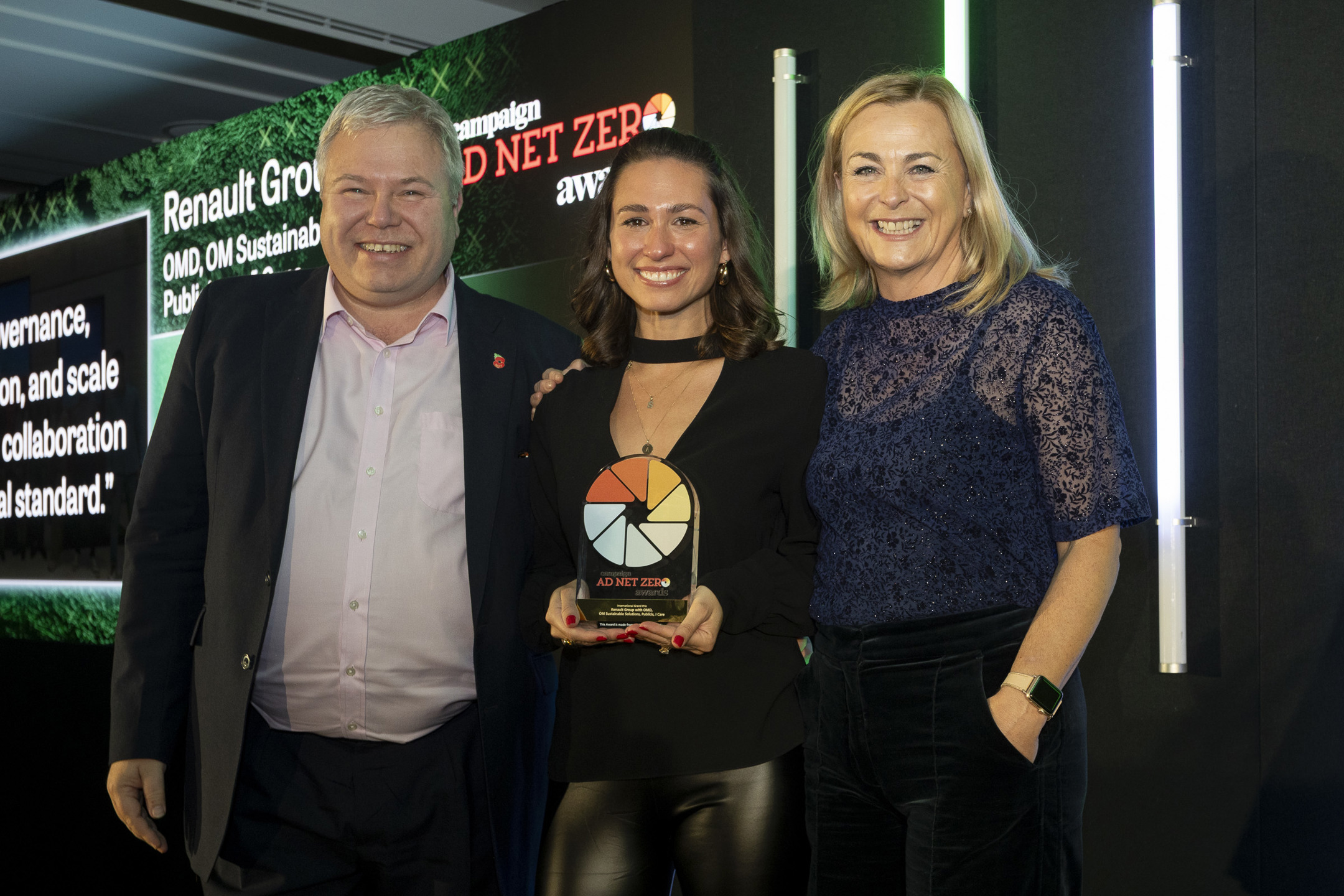
Renault Group, with OMD, OM Sustainable Solutions, Publicis and I Care, took home the International Grand Prix for its Sustainable Media System, which also won the new Marketing and Sustainability Collaboration award.
The judges praised it as “a great example of driving demonstrable action at scale”, with one noting that by anchoring accountability at group level, Renault Group is setting “a formidable standard for how major advertisers should manage their Scope 3 impact”.
Renault Group’s Branding Office and Group Sustainability leadership set a global ambition to reduce creation and media-related emissions by 5% a year. Since 2023, the programme has analysed around 400 campaigns and 294.6 billion impressions, with partners aligned across 23 markets. Between Q1 2025 and Q1 2026, media emissions across its G10 markets fell by 13%, and technical optimisation tests with six publishers in four countries achieved CO₂e reductions of up to 80%.
What makes the work replicable is the way it builds measurement into everyday decisions. A co-created Responsible Media Guidebook gives teams more than 30 practical levers and checklists: the kind of consistent, cross-market approach that Action 3 and the Global Media Sustainability Framework are designed to support.
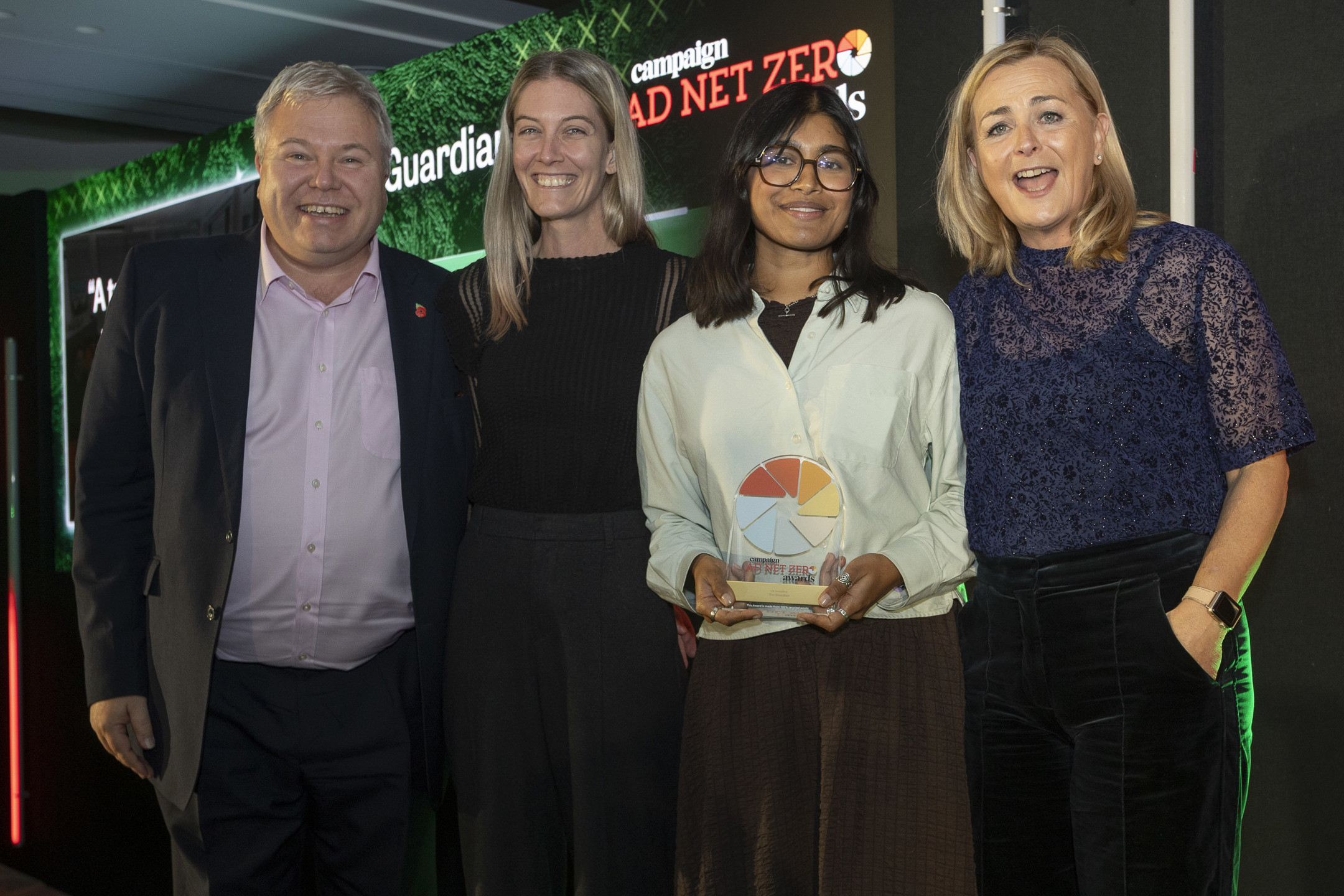
For the UK Grand Prix, The Guardian won for its long-term approach to climate action, also taking the Best Progress / Long-Term Change award.
The judges described its entry as a “robust and holistic strategy” with real societal reach, combining emissions cuts, fossil-fuel advertising restrictions, climate literacy and wider industry collaboration.
The Guardian has cut its absolute emissions by 48% in five years, verified without offsets and tracked against a 67% target. Its 2015 fossil-fuel divestment and first-in-industry ban on fossil-fuel advertising have helped set a benchmark others have followed. It has published more than 6,000 environment pieces, holds a B Corp score of 100.9, far above the median of 50.9, and created the world’s first carbon-literate sales team, which is now training agency partners.
By making environmental responsibility a core business priority, The Guardian shows how a media owner can align the way it operates with the values it champions, and strengthen audience trust in the process.
This year’s winners
Congratulations to all of this year’s winners and High Commendations.
Grand Prix
- International: Renault Group with OMD, OM Sustainable Solutions, Publicis and I Care. Its Sustainable Media System has analysed around 400 campaigns across 23 markets, cutting media emissions across its G10 markets by 13% between Q1 2025 and Q1 2026.
- UK: The Guardian. The judges recognised its long-term, total approach to sustainability across both its journalism and its business. It has cut absolute emissions by 48% in five years, verified without offsets, against a 67% target.
Innovation
- Best Business Transformation: Ocean Outdoor. It reduced market-based Scope 2 emissions by more than 85% from a 2022 baseline and channelled more than £8.9 million worth of advertising space to environmental charities.
- Best Progress / Long-Term Change: The Guardian. See Grand Prix above.
- Marketing and Sustainability Collaboration (new): Renault Group with OMD, OM Sustainable Solutions, Publicis and I Care. It embedded carbon reduction into media planning across markets, guided by a co-created Responsible Media Guidebook of more than 30 practical levers.
- The Business Case for Better (new): Channel 4 and B Lab UK. Business for Good helps purpose-led brands reach new audiences on TV, showing that sustainability and commercial success can work together.
- Outstanding Contribution to Sustainability – Team: Emota Global Exhibitions & Environments Team. Across live client projects, the team has achieved up to 98% waste reduction, 70% carbon reduction and 96% material reuse, alongside 40% cost savings.
Best Practice: International
- Best Practice in Sustainability – APAC: MBM for Meridian Energy. It filmed on site using solar power, a tight crew and hybrid vehicles, keeping production emissions, measured with AdGreen, 6 tCO₂e below the AdGreen average.
- Sustainable Media Planning – APAC: Benedictus Media for Australian Ethical. By switching to activity-based media data, it achieved a 17% reduction in carbon intensity across more than three quarters of its digital spend, while total paid media emissions fell 21%.
- Best Practice in Sustainability – EMEA: Spotify, The Afterlife of a Billboard. It engaged clients in giving static billboard materials a second life, diverting waste from landfill.
- Sustainable Ad Production – EMEA: Beiersdorf with MurphyCobb for NIVEA. It turned AdGreen baseline data into production KPIs, cutting average campaign emissions by 76.5%.
- Sustainable Events and/or Awards – EMEA: Emota for AstraZeneca. Its stand at ERS 2025 delivered a 56% reduction in tCO₂e and 82% less production waste against a traditional exhibition baseline, with 99% of booth materials reused, repurposed or recycled.
- Sustainable Media Planning – EMEA: Supply Finder and Impact Plus. Impact Green Deals brings carbon intensity into programmatic buying, cutting CO₂e by 49% per 1,000 impressions and cost per completed view by 45% in a live A/B test, without sacrificing reach, brand safety or viewability.
- Best Practice in Sustainability – The Americas: Outdoorlink. Intelligent illumination and remote monitoring across more than 150,000 illuminated faces and 15,000 digital displays avoid 39,393 metric tons of CO₂ a year.
- Sustainable Events and/or Awards – The Americas: Spotify, Spotify House at CMA Fest 2025. It cut the event’s total carbon footprint by 66% despite attendance rising by nearly a quarter, with a 72% waste diversion rate.
- Sustainable Media Planning – The Americas: Campfire Consulting for Allagash Brewing Company. By screening out high-carbon and off-brand inventory, it increased spend on brand-suitable placements nearly fivefold, while average exposure time rose 22% and viewability 13%.
Best Practice: UK
- Ad Tech Services: Numodo for Severn Trent Water. It rebuilt Severn Trent Water’s programmatic campaign to embed carbon reduction into planning, buying and delivery from the outset, reaching more than 8 million homes.
- Advertiser: MG OMD for giffgaff. giffgaff cut its greenhouse gas emissions by 9% year on year, sold 66% refurbished devices and unlocked £249,000 for UK nature.
- Agency: Media Bounty. It founded ACT Climate Labs, launched the UN-supported Fossil-Free Advertising Blueprint at COP30, and secured a legally binding, group-wide commitment from Factotum Group not to work with fossil fuels.
- Media Owner (sponsored by AOP): Mobile Media. It launched four fully electric, three-sided DigEVans with roof-mounted solar panels, as part of its goal of carbon neutrality by 2030.
- Sustainable Media Planning – UK: Good-Loop with the IPA. The IPA UK Carbon Calculator brings the Global Media Sustainability Framework (GMSF) into everyday planning, with 20 agencies across holding groups and independents already onboarded.
Sector
- Automotive, Travel & Transport: JCDecaux UK, MG OMD, Displayce and VIOOH for DESNZ. Using real-time grid data, the campaign cut emissions by 86% and avoided 4.3 tonnes of CO₂e, with 37% of viewers saying they would consider an EV next.
- Business & Industrial (UK): Havas Media for EDF and ITV. It built EDF’s Sunday Saver tariff into Coronation Street, generating 246,320 sign-ups and saving 153 tonnes of CO₂e.
- Business & Industrial (International): Media Bounty / ACT Climate Labs for Ocean Energy Pathway. It countered misinformation about offshore wind in Brazil, increasing support by 15.1 percentage points across the Northeast.
- Entertainment, Gaming & Leisure: Immediate and Antidote Studios by Rubber Republic. Its hopeful climate podcast, ‘Screw This… Let’s Try Something Else’, ranked in the top 5% of new podcasts on Apple Podcasts globally.
- Food & Drink: BBH for Tesco. Free Fruit & Veg for Schools reached more than 180,000 children across more than 500 schools, distributing 15.7 million portions of fruit and veg.
- Government / Public Sector: M+C Saatchi London for DESNZ. The heat pumps installed as a result of Feel All Warm & Fuzzy Inside are expected to save an estimated 3.25 million kg of carbon emissions a year over their lifetimes.
- Media: Ecologi with giffgaff and MG OMD. Media In Service Of Nature has unlocked £250,000 for UK nature projects through a commitment of 0.1% of media spend.
- NGO / Charity: December19 for Material Focus and Recycle Your Electricals. Festival out-of-home activity increased the share of 18–34-year-olds recycling their electricals from 64% to 75%.
- Telecoms: MG OMD for giffgaff. The Media Model That Funds Nature has mobilised £249,000 for UK nature recovery by linking media investment directly to environmental impact.
High Commendations
- Marketing and Sustainability Collaboration: Differentology for Bloomberg Media
- Best Practice in Sustainability Award – The Americas: Media Resources for Astral
- Best Practice in Sustainability Award – UK, Agency: WPP
- Business & Industrial: Design Bridge and Partners for Forest Carbon
Looking ahead to 2027
The Ad Net Zero team is already looking forward to next year’s awards, where we’ll celebrate the progress made and the new innovations driving more sustainable advertising.
If you want to be part of this movement and showcase your work in 2027, register your interest and join us in shaping a low-carbon future for our industry.