Tessa Walsh (IFR, London Stock Exchange Group) and Angela Doran (BNP Paribas Exane) opened with a focus on AI and its trade-offs in sustainability.
AI’s could offer powerful tools for good – from climate forecasting and scope 3 calculations to energy-efficient real estate design and carbon capture innovation, but it comes with heavy costs: resource intensity, rising data centre emissions, and societal risks such as job displacement and reduced child safety.
The key takeaway? Responsible governance and deployment must ensure that AI becomes an enabler, not an obstacle, to our sustainability goals.
That same theme of responsibility continued into the next discussion, where The Carbon Literacy Project, Hattrick, The Guardian and Beechfield Brands tackled greenwashing, greenhushing and everything in between.
With 68% of people believing businesses mislead them on sustainability, credibility has never been more critical.
The panel explored the paradox of organisations overstating their impact versus those staying silent out of fear – both of which stall progress and erode trust.
Solutions are emerging:
- According to Beechfield Brands, they achieved a 79% rise in certified product passports and a 717% increase in component traceability – tangible proof that transparency pays off.
- As they noted, brands like Patagonia show that openness is not a vulnerability but a strength.
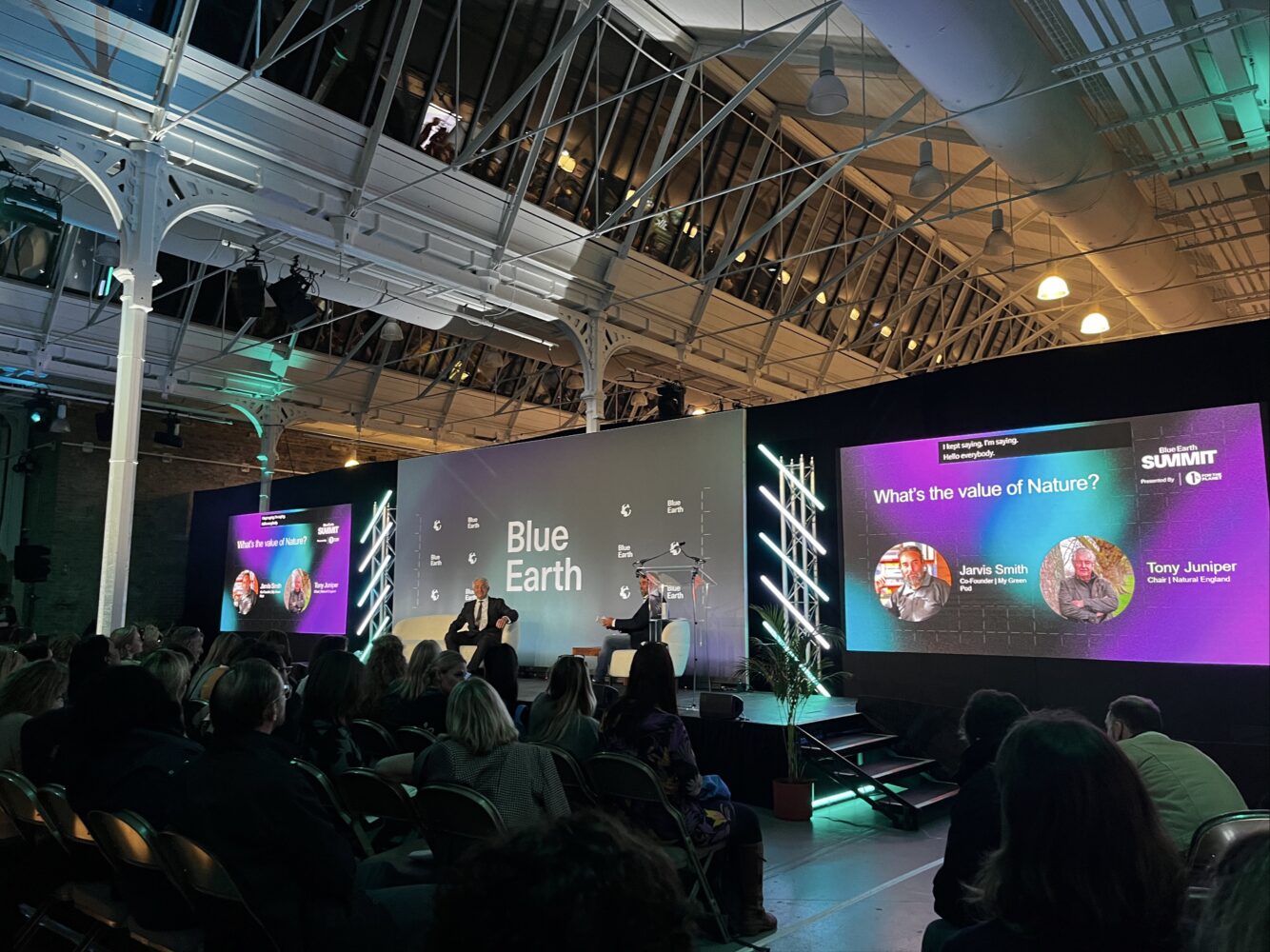
Shifting from communication to economics, Tony Juniper (Natural England) and Jarvis Smith (My Green Pod, P.E.A. Awards) explored what it means to go beyond GDP and recognise nature’s true value.
Everything comes from nature, yet its contribution remains invisible in economic metrics. To build a sustainable future, we must move from conservation to nature recovery and embed ecological resilience into growth.
Businesses and individuals must acknowledge that liquidating nature – exploiting it without limits – will ultimately destroy the very economy it supports. We cannot sustain growth if we undermine the environmental services that underpin it.
Ecological resilience alongside economic ambition is possible; it requires thought, creativity, effort, and partnership, but there’s plenty of real-world examples to follow- Tony cited housing developments in the Thames Basin Heaths as one, where alternative green spaces are being created to reduce pressure on highly protected areas.
Following this theme, Deborah Meaden (Investor & Entrepreneur) and Maeve Campbell (Channel 4) explored whether purpose-driven businesses are the smartest investments for protecting nature.
Deborah urged leaders to embed environmental thinking at the heart of business decisions – moving from niche to mainstream, guided by science and regulation that prioritise action.
She cited the insurance industry as one that understands long-term, systemic risk – something Ad Net Zero has noted before, having the Institute of Actuaries (check out their insightful reports) present at the 2023 Leadership Breakfast, and attending talks from Aviva and others during London Climate Action Week.
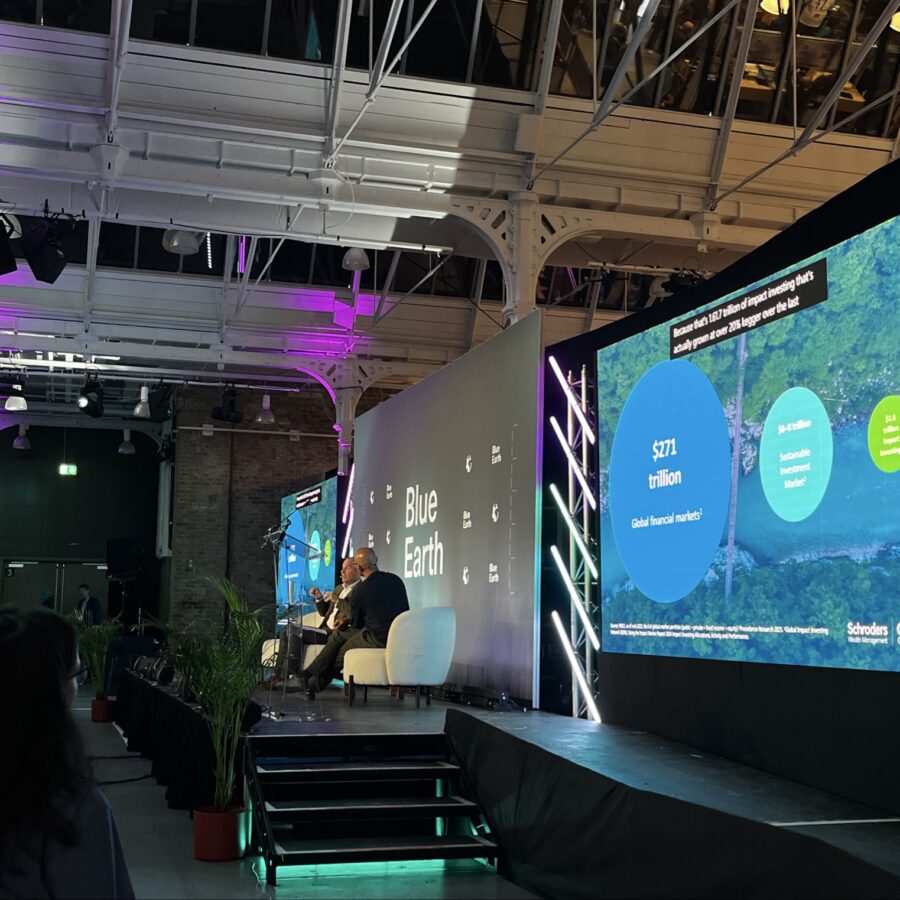
This conversation linked neatly to another panel with Oliver Gregson (Schroders plc / Cazenove Capital) and Keme Nzerem (Opening Up the Outdoors), which focused on climate-related losses – totalling $368 billion in 2024, with $223 billion left uninsured.
Echoing Tony and Jarvis’ sentiments, Oliver and Keme discussed the need for nature and climate to be embedded into financial models. Since 55% of the global economy – equivalent to $44 trillion – is dependent on nature, it should be accepted, not fought against, to do so.
With COP30 being billed as the ‘nature COP’, this focus, and the topic of biodiversity couldn’t be more important- and it was mentioned that biodiversity net gain is helping developers account for nature loss, offering a framework for more responsible building.
Moving on to private wealth, they addressed the power this has to drive societal change, with a reminder that what you do with your investments is 27% more impactful than your diet or other lifestyle choices.
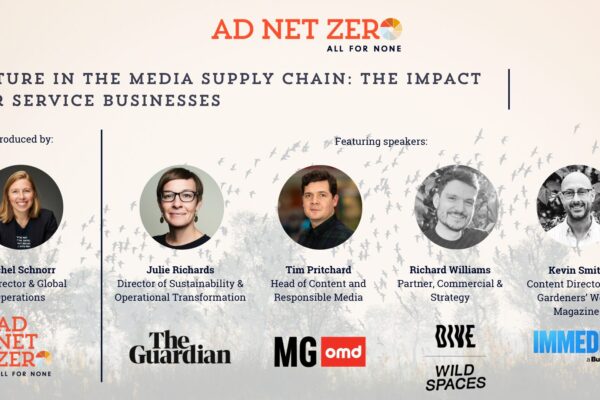
Bringing a media focus back to the forefront, Ad Net Zero’s Global Director Anthony Falco joined Adam Boita (Ecologi), Tracey Herald (giffgaff), Tim Pritchard (MG OMD) and Michelle Whitehead (Immediate) to discuss how the media industry can be a driver of nature recovery – not just consumer reach.
The panel called for a small but powerful shift: dedicating a fraction of media spend to regenerate UK habitats, from peatlands to woodlands, while still delivering measurable business outcomes.
As the World Economic Forum identifies biodiversity loss and misinformation among the top five global risks, the role of media in connecting people to nature has never been more urgent.
As Stephen Dickinson noted in his download from the session- “This isn’t philanthropic giving. This is an example of building longer-term strategic partnerships with brands and media owners… Move the conversation beyond price and performance. To differentiate your offer. To enhance your brand. To retain your talent”.