Ad Net Zero UK Leadership Breakfast 2025
5 December 2025
Five years after its launch, Ad Net Zero gathered leaders from across government, industry, and media to confront a defining question: how can advertising accelerate the shift to a sustainable, net-zero world, and what have we achieved so far?
While organisations including the World Economic Forum assessing how we’re doing at this moment in time, this event was a chance to reflect, take stock, and look to the future of what a sustainable world, supported by sustainable advertising, might look like.
With Keir Starmer pledging to ‘double down’ in the fight against climate change at COP30 recently, and the government having released its revised plan for meeting it’s Carbon Budget target at the end of October, it was notable that the Leadership Breakfast featured speakers from government, a first for an Ad Net Zero event.
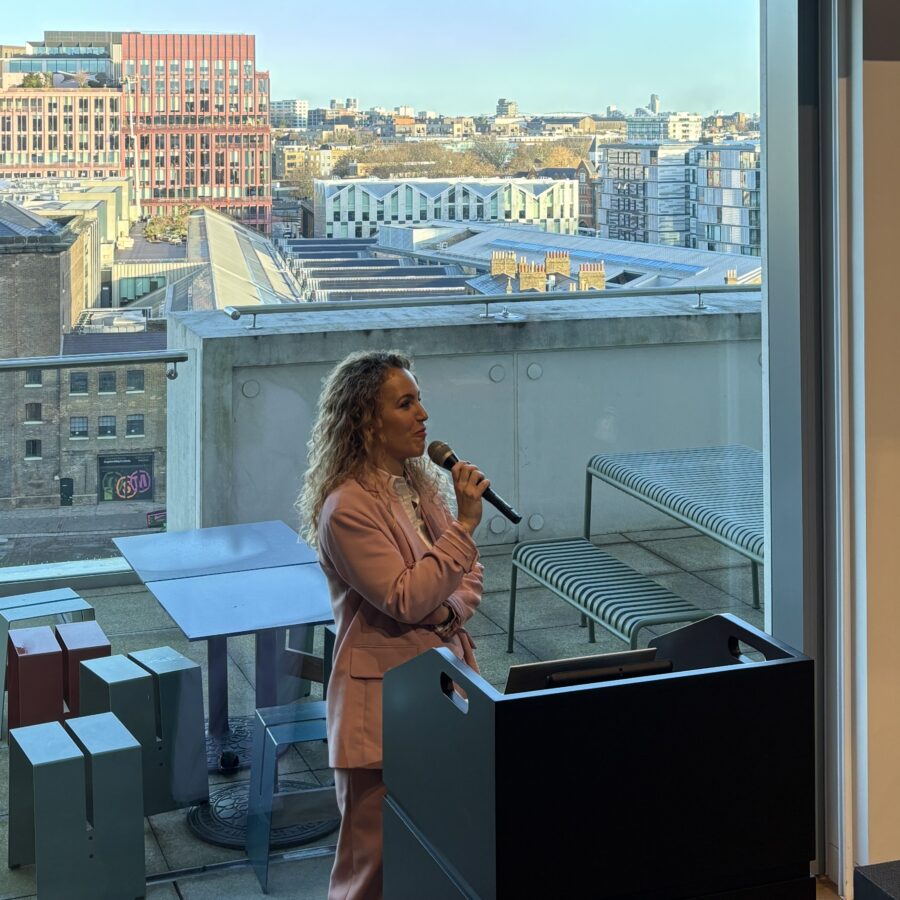
Kicking off the keynotes was Katie White OBE MP, Minister for Climate in the Department for Energy Security and Net Zero (DESNZ). The Minister referenced her interest in the advertising industry as one that was sparked at the eve of her political career, aged 21, when her mentor, Lord Puttnam, taught her about the power and influence of advertising industry, to “change lives” and “set the context for the government and for the business framework”.
Given that four in five Britons (79%) think it’s important that the government cares about tackling climate change, it was pertinent that the Minister mentioned recent campaigns from ITV and OmniGov at MGOMD for DESNZ, which aimed to close the gap between public demand and government action.
Noting the incredible progress made in the UK already, with reference to the phase out of coal as part of the UK’s decarbonisation process, the fastest of any major economy, and UK climate change acts that have become the benchmark for countries around the world, the Minister’s rallying cry was that we all “be optimistic about what we can achieve”, and take hold of the opportunity afforded to an industry of story tellers, in a world where “real behaviour change starts with the stories we tell”.
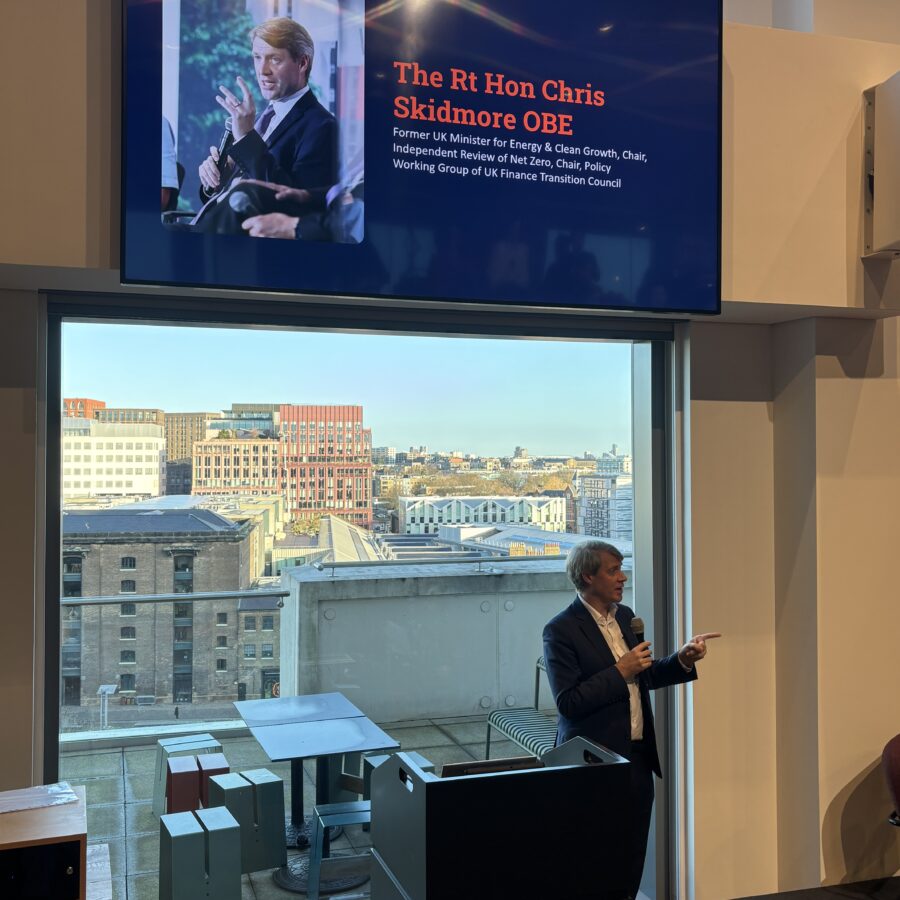
Continuing the theme of progress, a second keynote from The Rt Hon Chris Skidmore OBE, Former UK Cabinet Minister for Energy & Chair Independent Review of Net Zero, saw him referencing the impact of sustainable innovation on the lives of everyday citizens. From schools to hospitals to big business estates, the introduction of low carbon innovations results in cost and carbon savings across the board.
Case studies of such savings are detailed in Chris’ recent report, ‘Mission Zero’, including retrofitting pilots in 23 schools across New York which could achieve a reduction in energy costs of 42% per year (pg. 148).
Chris referenced former U.S. climate envoy John Kerry’s message about the need for ‘ESG’ to rebrand, to stand for “efficiency, security and growth” in order to prove the worth of this progress to everyday individuals.
Chris reinforced the fact that the uptake of climate action and sustainable technologies makes business sense, with states like Texas being home to some of the largest solar farms in the US, because it’s the cheapest thing to do there.
The need for reflection and acknowledgement of progress was backed up by a mention of his report, ‘Making the Case: Pathway to Progress’, launched with The Climate Action Coalition at COP30, which aims to highlight “the tangible progress already being made in the global energy transition”.
He left the room with the idea that the opportunity for efficiency, security and growth is unstoppable, but that we “need to accelerate further and faster” and “make the case for change” to communities who don’t yet understand the impact this shift can have on their everyday lives.
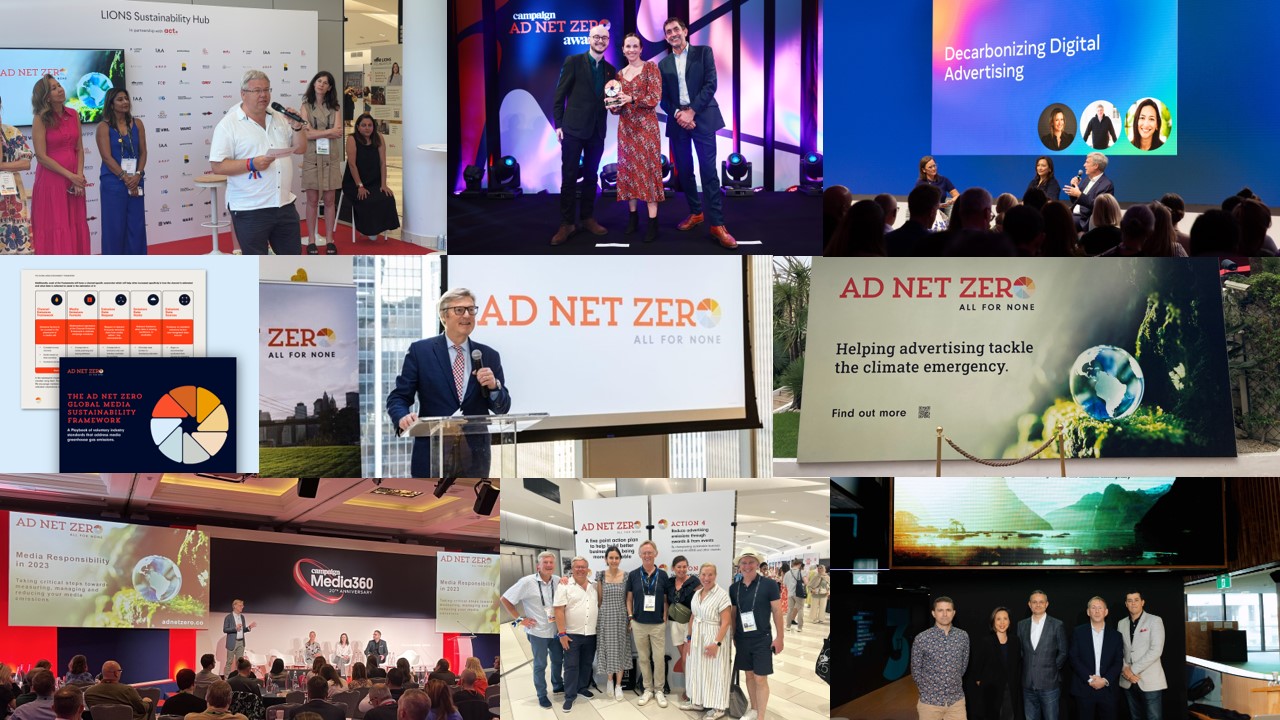
Five years since the launch of Ad Net Zero – where are we and what’s next?
After the keynotes, Matt Bourn reflected on the inception and past five years of Ad Net Zero. Matt noted how the launch of Ad Net Zero was “pinned to our [the Advertising Association’s] mission around responsibility”. At the time, they “were being asked, morally, what is the role of advertising when it comes to climate change?”.
Over 5 years Ad Net Zero has gone from a launching point of support from the IPA and ISBA, Adam&Eve DDB on design, and Sky & Unilever, to a global network of almost 300 supporters.
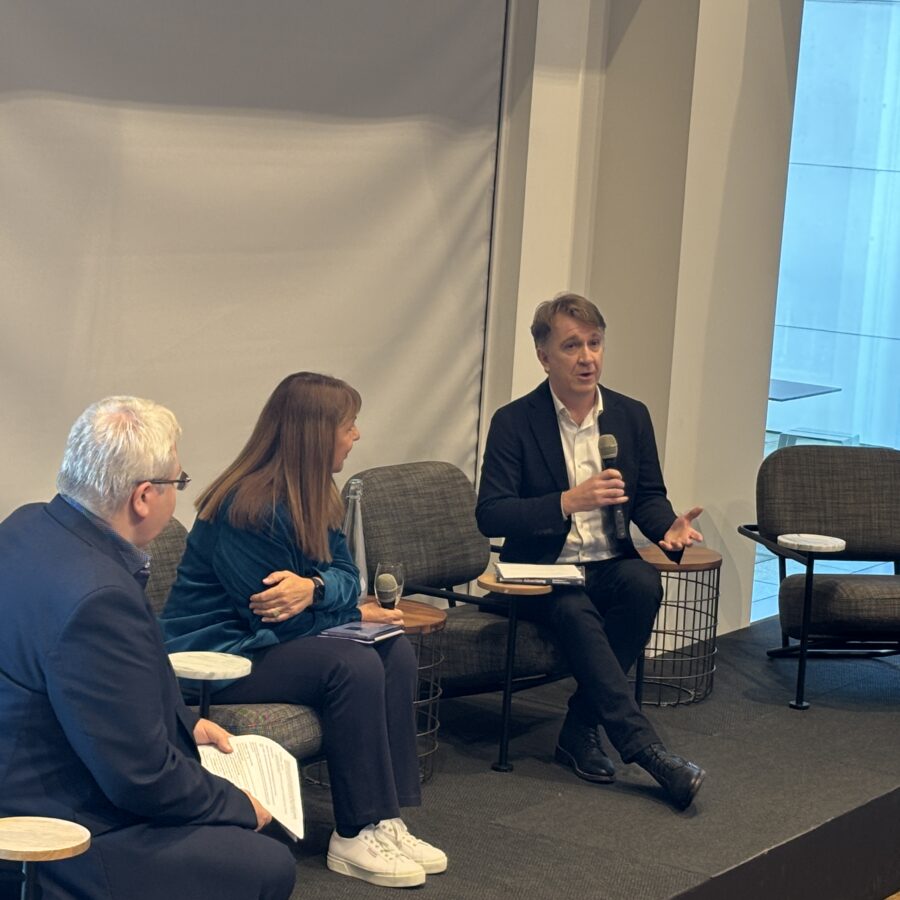
Matt spoke about how Ad Net Zero’s mission is to get to a world where “Every single ad is made sustainably, delivered sustainably, and promoting sustainable product, service or behaviour.”
We have moved beyond the moral imperative and can now see the commercial benefits of these actions, backed by clear data. 62% of UK Ad Net Zero supporters are reporting better client and partner relationships as a result of their sustainability action. For any business, these success metrics are desirable, and Matt asked the room, “Who doesn’t want stronger client relationships? Who doesn’t want stronger partner relationships?”.
Alessandra Bellini, UK Chair of Ad Net Zero, built on this to incorporate the improvements this action can have on individual businesses.
Moving from reflection to a forward-facing outlook, Alessandra noted that, while the 62% statistic is a compelling one, there is an opportunity to improve that number even higher.
Amidst a talent crisis, Alessandra discussed how sustainability is “about motivation, recognition, values, work that is much broader” to help build a workforce of talented, engaged and passionate employees, at a time when 70% of Gen Z and Millennials consider environmental sustainability important when choosing employers.
To “make it easy” for businesses to take “the very best out of Ad Net Zero” Alessandra outlined the newly launched three tier model for becoming a supporter of Ad Net Zero. Offering entry point for businesses across the spectrum of sustainability progress, there is now an opportunity for all businesses to get involved with the programme.
So far, Ad Net Zero have seen the highest proportion (61%) of supporters opt for the top ‘Accelerator’ tier, versus only 6% of existing supporters opting for the base ‘Supporter’ tier.
Beyond the existing network of supporters, Alessandra’s call to action to the room was for everyone to ‘Refer a friend’. While there has been amazing growth over the last 5 years, if we are to meet 2030 targets and transition to a net zero economy, we need every business to be engaging with best practice examples and industry-wide frameworks, and aligning and upskilling their workforces to come along for the journey.
While the UK chapter led the way, Sebastian Munden gave a nod to the Australia, New Zealand, and US chapters of Ad Net Zero for taking the framework and “running with it”. He addressed the need for consistent measurement frameworks, which will allow the continuation of building sustainability into BAU.
“By scaling measurement, we can scale progress”, and initiatives such as AdGreen, now used in 40+ countries globally, are allowing tangible measurement and reduction from advertising production. AdGreen continue to be a force for change, leading the way through continuous updates including the recent introduction of AI-production led emissions.
Echoing a notion from Leo Rayman, Founder and CEO, Eden Lab at the IPA’s Sustainability Summit which took place last week, Seb outlined how this offers the industry “the commercial opportunity of a lifetime” and urged industry professionals to work with those future focused businesses who aren’t yet our clients.
A framework that helped “unlock the importance of working in a global way” was the Global Media Sustainability Framework, focusing on the carbon hotspot that is media planning & buying. The framework offers the industry “another currency” alongside economic metrics, that advertisers and agencies can use to demonstrate competitive advantage, and with the IPA integrating their new media calculator with the GMSF, the industry is intent on supporting this framework.
The “big opportunity” is, as discussed by Minister White and Chris Skidmore, is sustainable behaviour change. With a wave to Kantar, Seb noted the results from Ad Net Zero’s partnership with the research & data company, which revealed that from almost 10,000 analysed ads globally, only 5.3% are currently showcasing sustainable products, services, or behaviours.
Seb closed out with an insight from CBI that shows that the net zero economy grew at 10.1% from 2023-2024. Compare this with the growth rate of the UK economy, which has averaged around 1.5% since mid-2024, and you have a clear picture of a successful business opportunity here.
If, even while only 5% of ads are focusing on this area, the net zero economy achieved a growth rate 10x higher than the average, the potential for future growth is monumental, should the advertising industry choose to fully engage.
The global programme continues to evolve, with partnerships with initiatives including the International Chamber of Commerce, Institute for Real Growth, SBTi, the UN Global Compact, Climate Action for Associations, Coalition for Sustainable AI, and more.
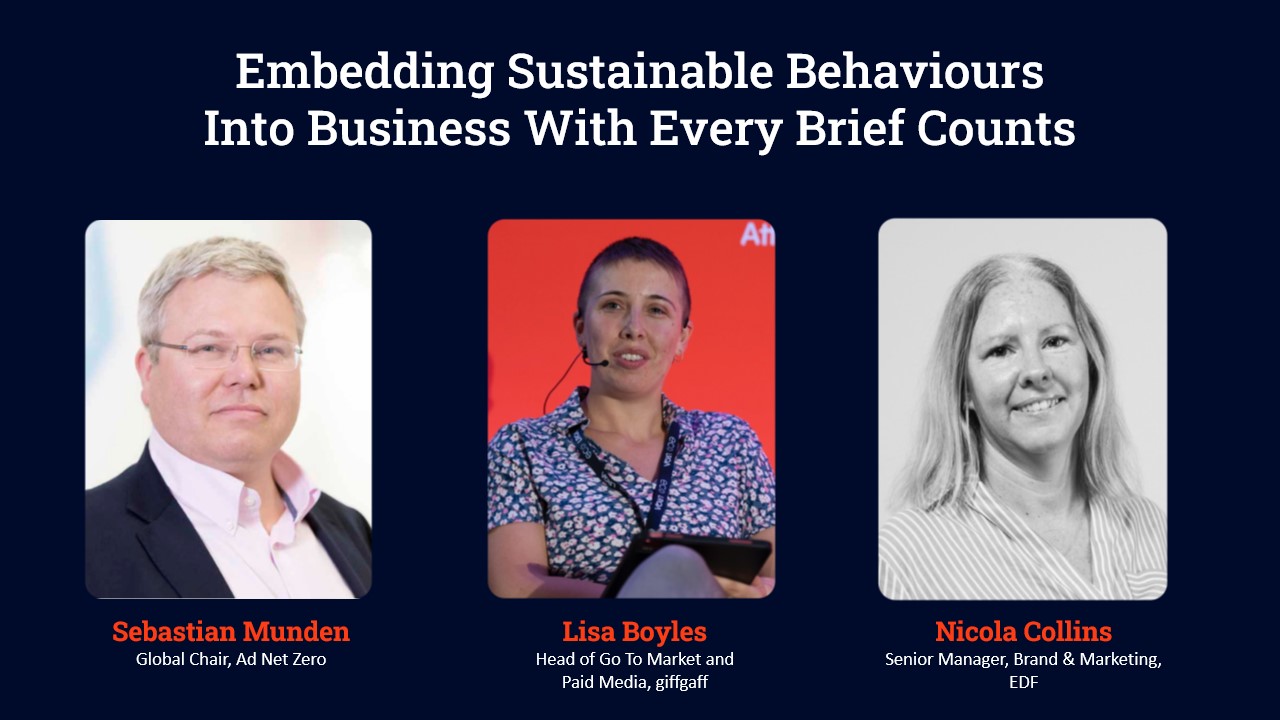
Embedding Sustainable Behaviours into Business with Every Brief Counts
Welcoming Lisa Boyles, Head of Go To Market and Paid Media at giffgaff, and Nicola Collins, Senior Manager for Brand & Marketing at EDF to stage, Seb hosted a session exploring how the two leading brands embedded sustainability into everyday briefs- in the telecoms and energy industries.
Lisa reflected on giffgaff’s extensive use of the ‘Every Brief Counts’ toolkit in not one, but three partnerships with media owners- TikTok, JC Decaux, and MGOMD. Focusing on the partnership with Global, Lisa ran through recall and insight statistics from the radio campaign that demonstrated the impact it had on tackling misconceptions around refurbished phones.
By focusing on “reaching people where they are”, promoting quality and value rather than overt sustainability messaging, the campaign had broad cut through and delivered strong results – a 30% increase in agreement that the content dispelled myths and a 33% uplift in consideration for refurbished devices from giffgaff.
When it came to wider success with sustainability at giffgaff, Lisa’s advice was pragmatic: “Start with training – ‘Every Brief Counts’ or the Ad Net Zero Essentials Course… get measurement going, start with one channel and then expand.”

EDF have a long-standing history with behaviour change- they were the first brand to take the #ChangeTheBrief training- and Nicola shared a bit about their ‘Sunday Saver’ initiative, designed to help customers shift energy usage away from peak times by offering up to 16 hours of free electricity on Sundays, lessening pressure on the grid and helping customers save money on bills.
They directly aligned their media placement with customer reach, and, identifying that 50% of Coronation Street viewers were already EDF customers, they integrated the campaign into the mainstream soap.
Nicola emphasised collaboration- “The only way that we can get to [net zero] is if we all work together. If we leave it to one company or one individual, we’ll never get there”, and the need to make behaviour change feel normal and positive, which is essential to EDF’s motto- “Change is in our power”.
Seb reminded the room that the essence of sustainability is efficiency, and getting more out of less, which is the core message of both giffgaff and EDFs campaign- a focus on reuse, softening our impact on infrastructure, and saving consumer’s money while you’re at it!
The session closed with a call for more case studies using the ‘Every Brief Counts’ toolkit, that demonstrate the commercial and behavioural impact on B2B and B2C fronts. For Ad Net Zero’s ‘Accelerator’ supporters looking to take Lisa’s advice about starting with training- book an ‘Every Brief Counts’ workshop with the team in 2026.
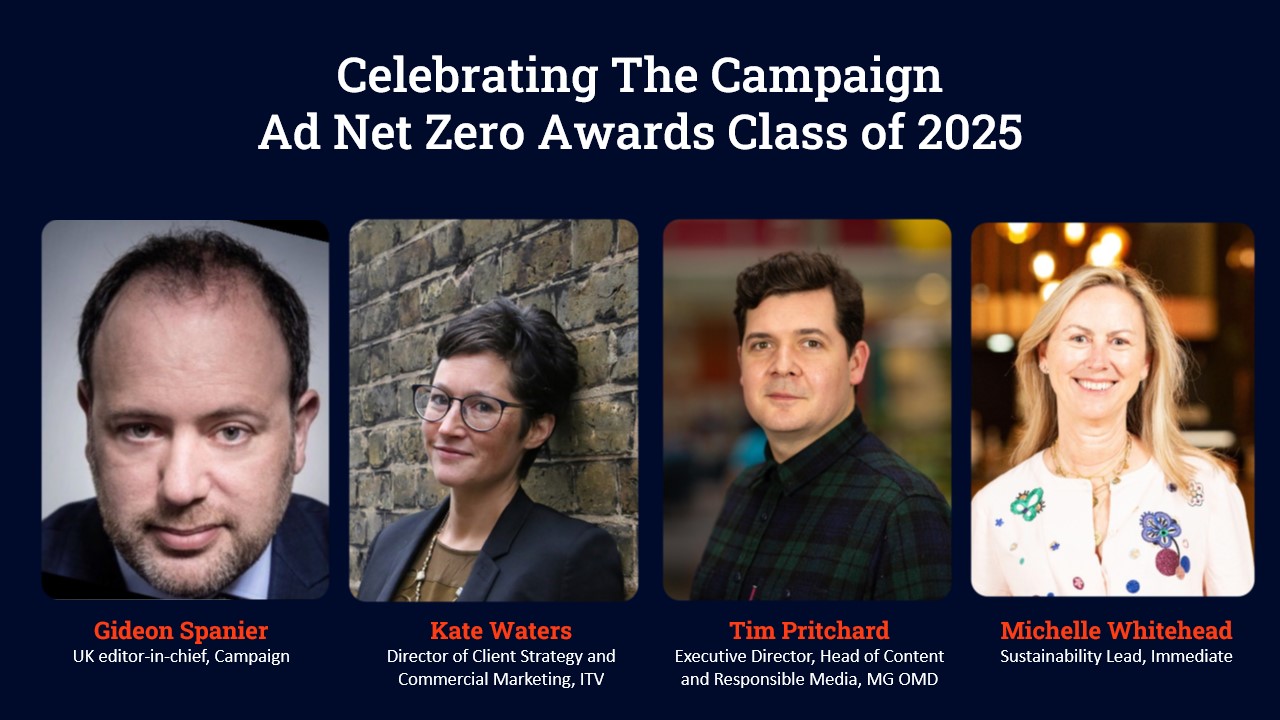
Celebrating the Campaign Ad Net Zero Awards Class of ’25
For the finale, Gideon Spanier, UK Editor-in-Chief at Campaign, moderated a session highlighting two winners of the 2025 Campaign Ad Net Zero Awards – ITV & MGOMD’s campaign for the Department for Energy Security and Net Zero (DESNZ), which took home the UK Grand Prix, and Immediate Media for their ongoing sustainability progress, which won them the ‘Best Practice in Sustainability Award – Media Owner (UK)’ trophy.
Tim Pritchard, Executive Director and Head of Content and Responsible Media at MG OMD set the scene of how they went about taking heat pumps mainstream. Faced with a tough brief- overcoming unfamiliarity, facing misconceptions similar to those around refurbished phones, cost concerns from customers- they were intent on cutting through, given that they “knew that 18% of emissions are based on home heating, so there was a really significant win to be made here”.
Focusing on cost saving incentivisation- a government contribution of £7.5k towards heat pump installation- and utilising the power of the soap opera- similar to the EDF campaign- they embedded heat pumps into Emmerdale’s plotline, created contextual ads, and shared behind-the-scenes content.
“You’re just saying, this is completely normal. Everybody like you does this,” Kate Waters, Director of Client Strategy and Commercial Marketing at ITV, noted. By making sustainable choices feel everyday, the campaign demonstrated the unique role of entertainment in driving change, reminiscent of their award-winning campaign with Love Island and eBay.
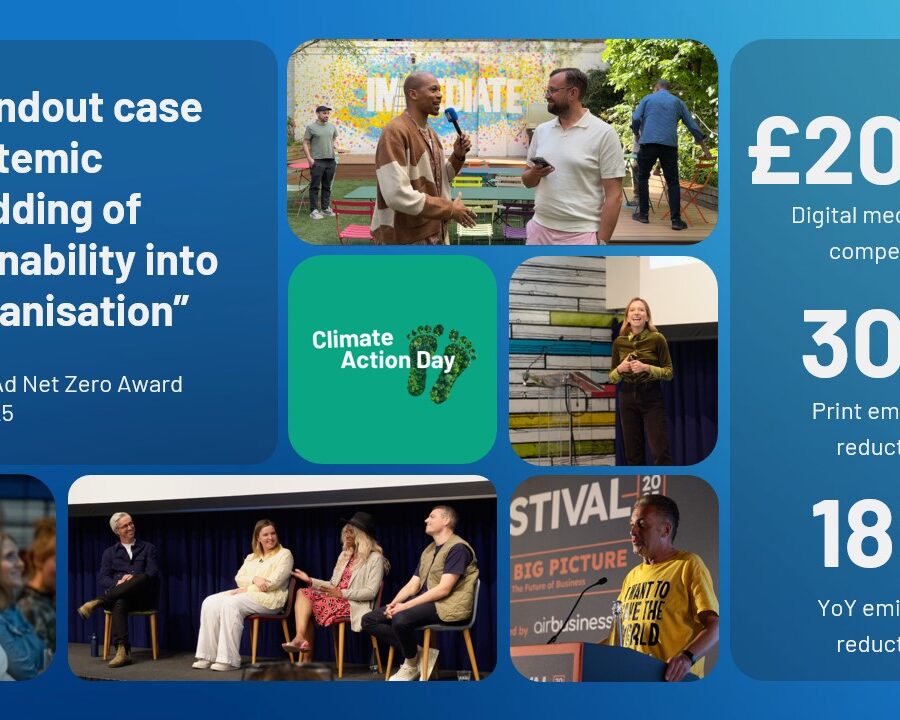
Gideon reminded the room that “sustainability isn’t a one-year journey”, which set up Michelle Whitehead, Sustainability Lead at Immediate, perfectly to share how the business had worked since 2021 to embed sustainability across its entire business through an impressive list of projects; climate industry training and annual action days to department-level climate KPIs.
“We wanted our people to understand that sustainability is a responsibility and to help them realise there is a climate opportunity in every job,” she said.
While they’ve achieved a 43% reduction in scope 3 emissions across the business so far, they’ve developed IM Clear, a tool for advertising clients, which includes a carbon calculator and emissions reporting for every campaign, and offers an end-to-end ESG score for campaigns and ensures they remain true to the brand’s sustainability messaging and goals, supported by the GoodNet.
Michelle spoke about how they had incentivised advertising partners further, offering £200k worth of digital ad space as part of an IMClear competition to brands making progress on their ESG targets. Tony’s Chocolonely won the competition, and their digital advertising campaign will run across Immediate’s marketing-leading brands, including Radio Times, Good Food, and BBC Gardeners’ World Magazine.
The panel agreed that awards like these are more than recognition- they inspire creativity and momentum. Kate claimed that the award win is “a fantastic message to the sales team” that “it is possible to make change happen, in an interesting and creative way”.
As a client, the single thing to convey to your agencies is “think imaginatively about how to do this”, since “creativity is what powers the effectiveness of advertising”.
In an industry that loves innovation, Tim urged the room to “engage people in the future of media”, and Gideon rounded out by compelling the industry to enter next year’s awards and get these stories out there.
Closing Remarks
Seb closed the event with an ask, and an offer of support- “The opportunity now is to scale the number of supporters and for advertising to engage with and participate in the faster-growing economy. Ad Net Zero is here to support your journey with frameworks, tools, and communities to help you compete and grow.”